
Eat your way through Osaka - on two wheels
Overview
Osaka is a city that organises itself around eating. The problem for visitors is that the food is scattered: the standing sushi counter is twenty minutes from the takoyaki stall, the good okonomiyaki is nowhere near the famous okonomiyaki, and the Korean market that locals rate is a trek from anything in a guidebook. Walking it means eating two things and running out of afternoon. Taking taxis means paying more for transport than food. A bike solves it exactly: flat city, quiet backstreets, ten minutes between neighborhoods, and — the part nobody mentions — a bit of gentle pedaling between courses is precisely what lets you eat five of them. We've been riding and eating in this city since 2013, as the first company in the Cycle Japan family, and this guide is what we tell guests before they ride.
Why a bike beats walking in Osaka
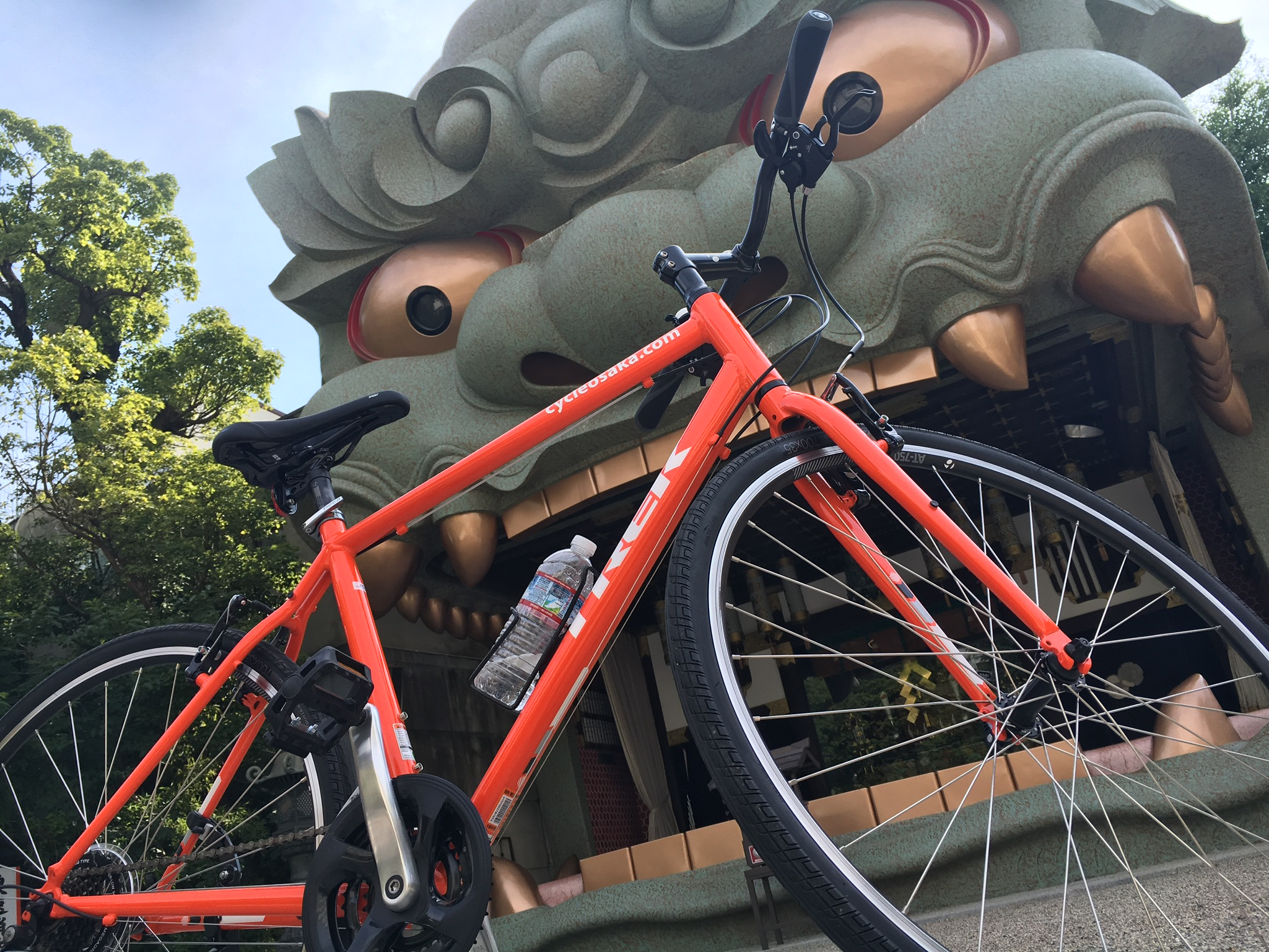
Osaka is flat. Genuinely, unusually flat — it's a river delta, and outside the northern hills there's barely a gradient worth the name. The city is also laced with riverside paths along the Yodo, Okawa and Dojima, which means you can cross the middle of a city of two and a half million people without fighting traffic.
What that buys you, for eating, is range. On foot you get one neighborhood. On a bike you get Tenma, Tsuruhashi, Shinsekai and more in an afternoon, and this is the difference between tasting Osaka and tasting one street of it.
The other thing worth saying plainly: Osaka's best food is not where the crowds are. The famous strip is genuinely fun and worth seeing — but the standing sushi bars, the neighborhood kushikatsu counters, the Korean grocers and the shotengai arcades where locals do their actual shopping are spread across the city in ways that only make sense on two wheels.
The dishes, honestly
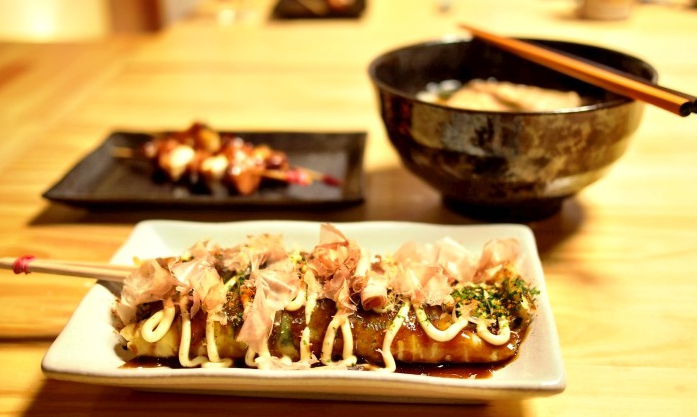
Takoyaki. Octopus dumplings, the thing Osaka is most famous for. Molten inside — properly molten, wait longer than you think — and best from a stall with a queue of locals rather than a photogenic frontage, we honestly don’t stop for them on every tour but our guides know where they are and are happy to pass on the knowledge!
Okonomiyaki. A savory cabbage pancake, and the Osaka style is mixed rather than layered (that's the Hiroshima difference, and yes, our Hiroshima colleagues will argue about it). Filling. Don't make it your first stop of five.
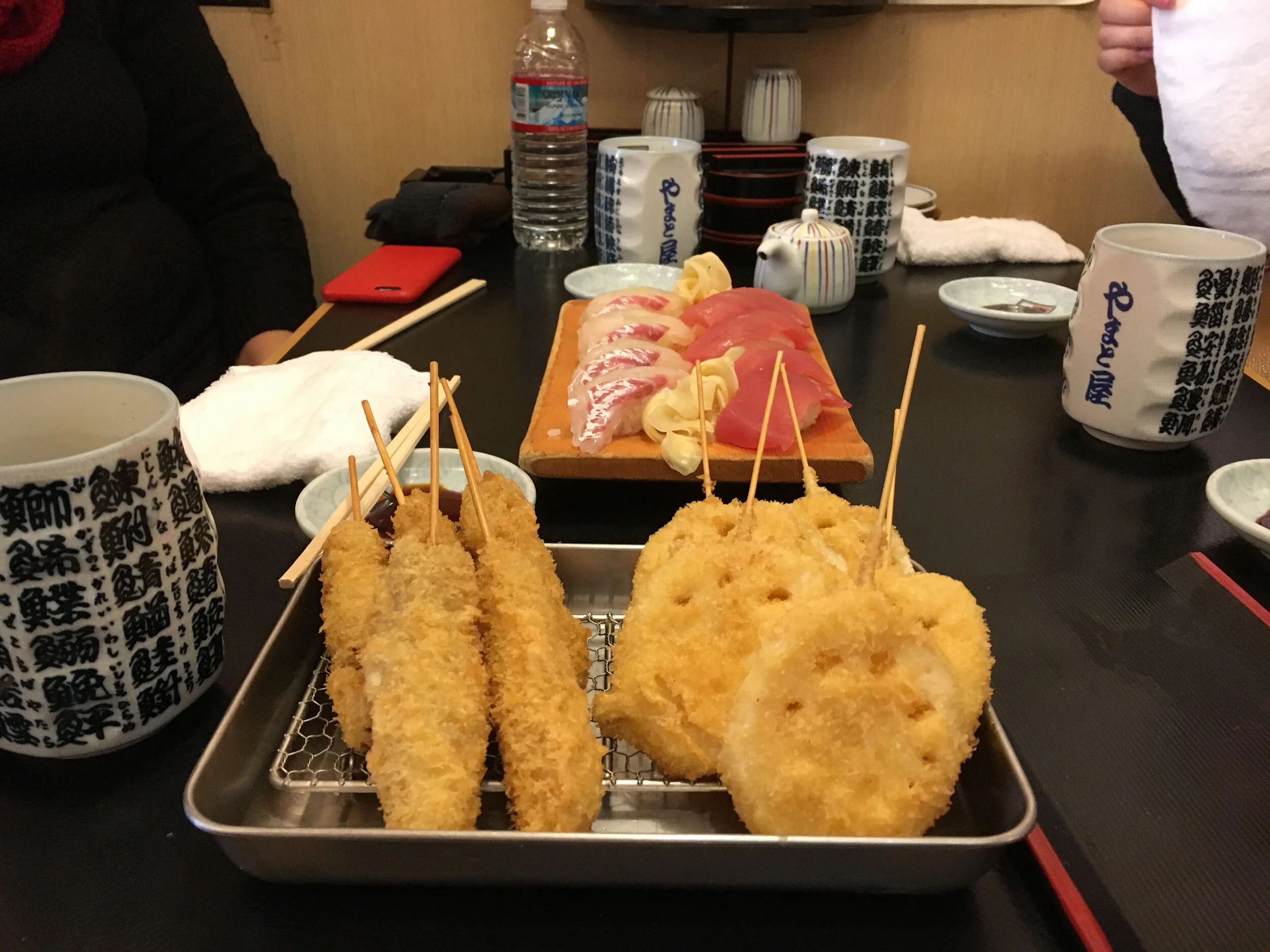
Kushikatsu. Skewered, breaded, deep-fried everything, invented in Shinsekai and still best eaten there. The one rule that matters and that every local will enforce: no double-dipping in the communal sauce. Dip once, on the way in. If you need more, use the cabbage as a spoon.
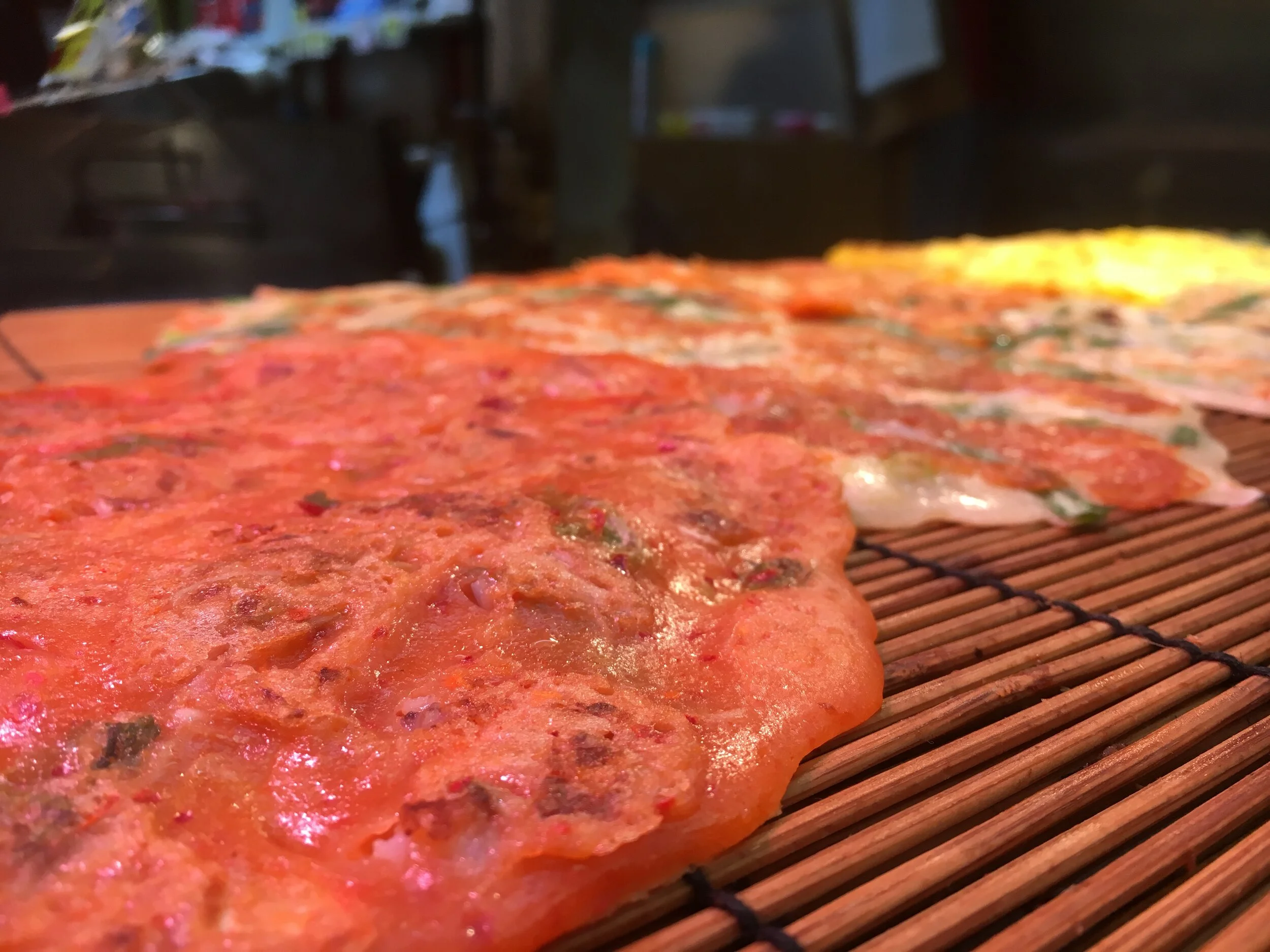
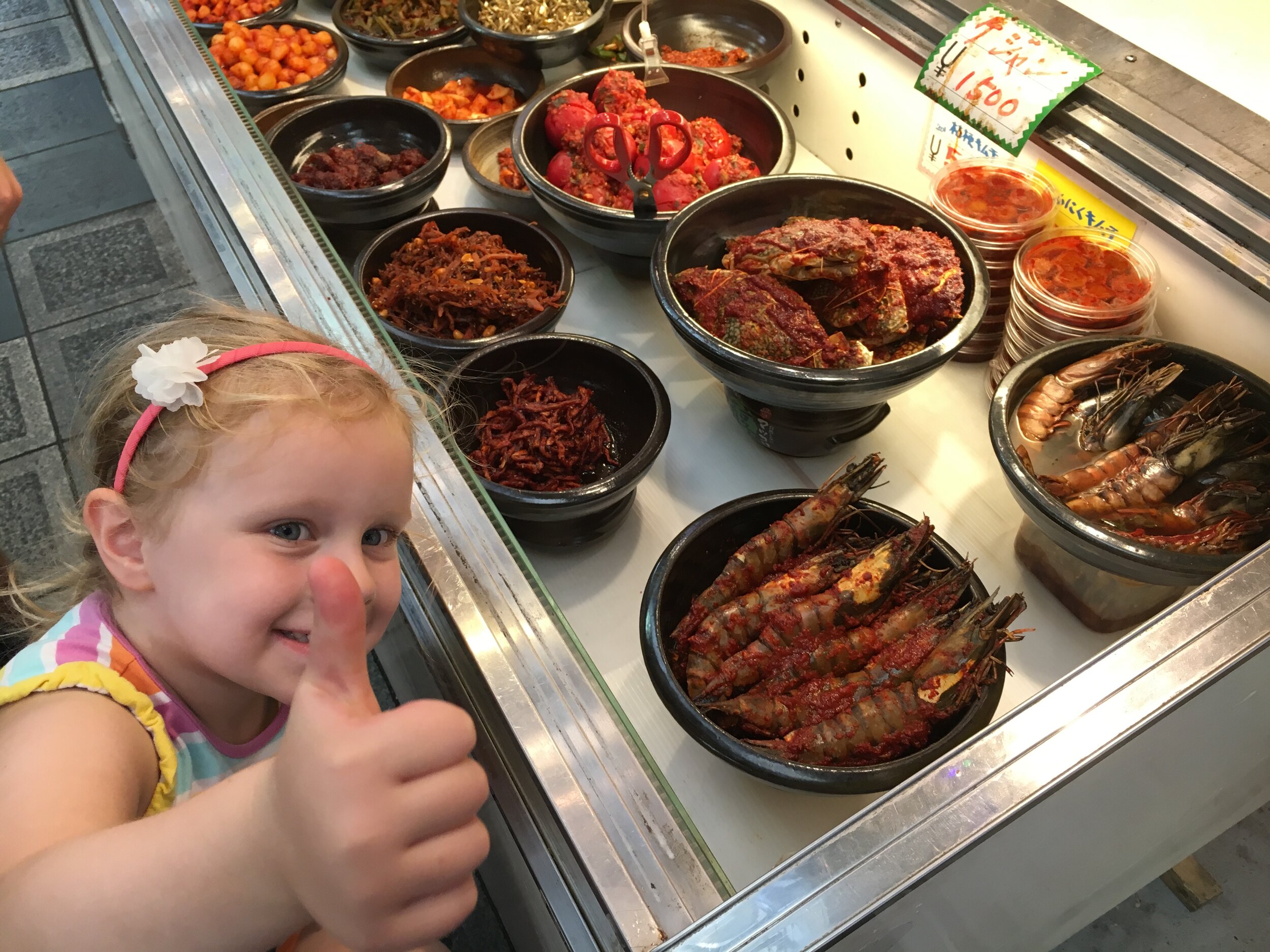
Chijimi and the Korean quarter. Osaka has Japan's largest Korean community, and the food that comes with it — savory pancakes, kimchi made on site, grocers selling things you won't find elsewhere in Japan — is one of the genuinely distinctive things about eating here. Most visitors never get near it.
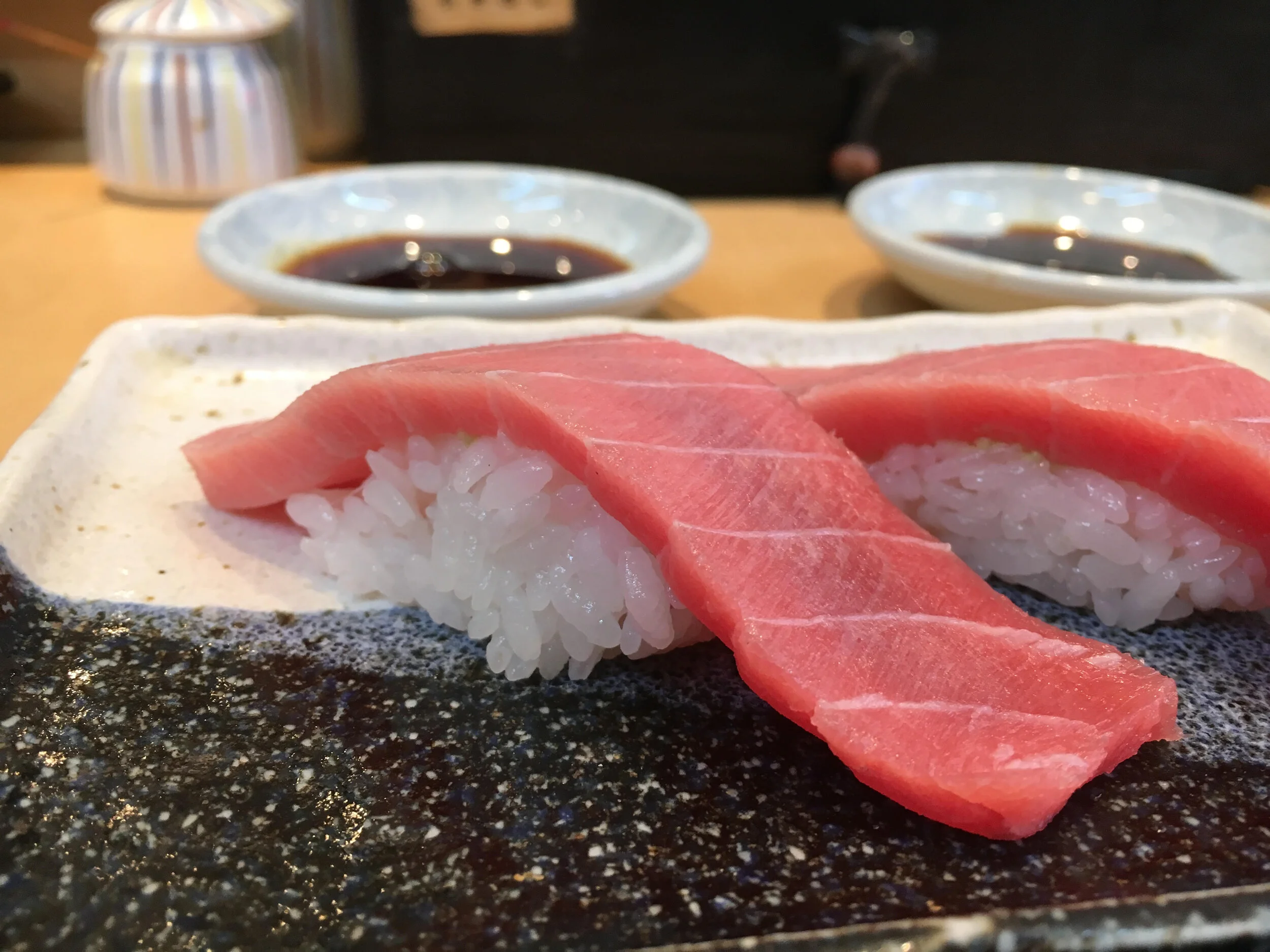
Standing sushi. Counters where you eat standing up, fast, cheap and often extremely good. This is the format that surprises people most — it feels like a snack bar and tastes like a proper meal, one of our favorite standing sushi bars in the blue collar neighborhood of Kyobashi is a feature of most of our food tours and can always be added to privates.
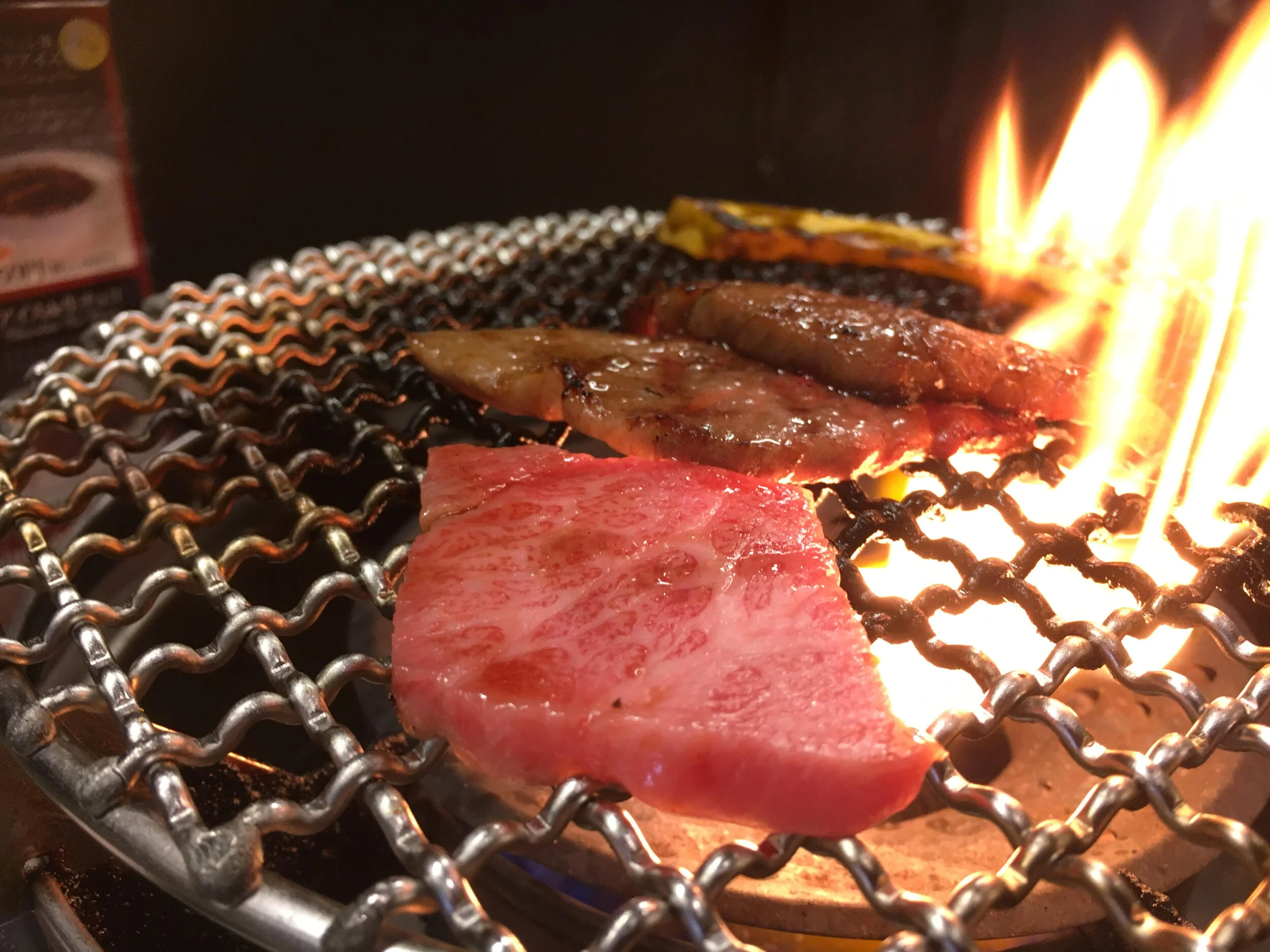
Wagyu, and knowing when to spend. There's superb beef in this city at every price point, Yakiniku alley in Tsuruhashi is one of our go to spots for Wagyu - away from the bright lights of Dotonbori, all of the taste for a fraction of the cost

Udon. Osaka's broth is lighter and clearer than Tokyo's, and the city will tell you at length why that makes it better. If you really want to know this dish, you can make it by hand at our friends house near the castle, check out Eat Osaka for more info.
The neighborhoods, by bike
Tenma. Our home ground — the shop is at 1-10-7 Tenma, Kita Ward — and one of the best eating-and-drinking districts in Japan that almost no guidebook leads with. Densely packed izakaya, standing bars, a long covered arcade. Ten minutes from the shop and a different world from the tourist strip.
Nakazaki-cho. Old wooden houses that survived the war, now full of tiny cafés, second-hand shops and galleries. Slow, quiet, photogenic, and completely walkable once you've cycled there — which is the point.
Shinsekai. Built in 1912 in imitation of Paris and New York, now cheerfully, defiantly itself: Tsutenkaku tower, kushikatsu counters, and a slightly raffish atmosphere that Osakans are fond of. This is where deep-fried skewers belong.
Nakanoshima and the riverside. The civic, elegant Osaka — the Central Public Hall, tree-lined water, the Japan Mint. Less about eating, more about the ride between meals, and genuinely lovely in the early morning.
Osaka Castle. Unavoidable and worth it, particularly the park around it rather than just the keep. Our Half Day and Full Day tours both take it in.
Juso. Across the river, unpolished, and the sort of place regulars send you to when you ask where they actually drink, the centre of our Urban Canvas tour and a side to the city that remains ridiculously unknown to visitors.
Tsuruhashi and Morinomiya. Independent cafes, gyoza dumpling institutions, day drinking, our favorite market in the city and the best of the Korean influence in the city.
Dotonbori: go, but manage expectations
You will go to Dotonbori, and you should — the neon, the Glico running man, the canal at night are a genuine spectacle and a real part of the city's character. Just don't plan your eating around it. Prices are higher, queues are longer, and the quality is aimed at people who will only eat here once.
Our honest advice: see it in the evening and head with someone who knows where they are going, our friends at Taste Osaka have been running tours of the back-alleys and bars for years they know the area better than anyone
What the Bike & Food Tour actually is
A 4-hour guided ride covering roughly 12 km through the parts of Osaka that eat well and don't advertise. Four food stops, a local guide, small groups of up to 8, departing daily at 10:30 from our shop in Tenma. ¥15,000 per person, or ¥80,000 for a private group. Suitable for ages 13 and up. Includes the bike, helmet, guide and all the food. Because places close on certain days and we run every day, we cannot give you a dish by dish run down of exactly what you will eat, but that is a feature not a bug and there is more to the city than 4 spots!
Come hungry and skip breakfast. This is not a tasting menu in the delicate sense — it's four proper stops, and people are routinely surprised at how much food is involved.
If you'd rather see the city first and eat second, the Full Day Highlights tour is 5 to 6 hours over about 24 km — Osaka Castle, Shitennoji Temple, Shinsekai, Nakanoshima and the Japan Mint, with lunch included, ¥16,000 per person, departing 9:30 daily. The Half Day covers the essentials in 3 to 4 hours and 15 km for ¥11,000, departing 10:00.
Practicalities
Dietary requirements. Tell us in advance and we can work with most things — vegetarian is straightforward with notice, and we'll be honest with you about what's harder. Vegan guests can be accommodated but it is tricky - get in touch in advance for honest advice and planning. Religious dietary requirements can be adapted to but will always need to be booked as a private tour.
Fitness. If you can ride a bike, you can do this. The city is flat, the pace is relaxed, and the distances between stops are short. Our bikes are Trek hybrids fitting riders from 145 to 200 cm, with electric-assist Panasonics available for a small supplement, kids' bikes from 120 cm and child seats on request.
Booking. Book at least two days ahead — earlier for cherry blossom and autumn. Riding in the rain is neither fun nor safe, so if the previous day's Japan Meteorological Agency forecast puts heavy rain above 60% we'll cancel and refund in full, we'll email you by 7pm the evening before in this case.
Finding us. The shop is a 10-minute walk from Temmabashi station on the Tanimachi (purple) line, out of Exit 1. It's a meeting point rather than a walk-in shop, so please book rather than turning up.
When to come
Spring, late March into April. Blossom along the Okawa river and in Osaka Castle park, and the Japan Mint's cherry tree avenue opens to the public for about a week.
Summer, June to August. Hot and humid, and honestly quieter than you'd expect. Ride in the morning, drink more water than you want to, and consider the e-bike. June brings the rainy season — see the rain policy here.
Autumn, October to November. The best cycling weather of the year, and the food gets better too as the season turns. Our busiest period, so book early.
Winter. Yes, we ride. Cold but clear and bright, the city is at its emptiest, and hot food outdoors in December is one of the underrated pleasures of Osaka.
The rest of Osaka by bike
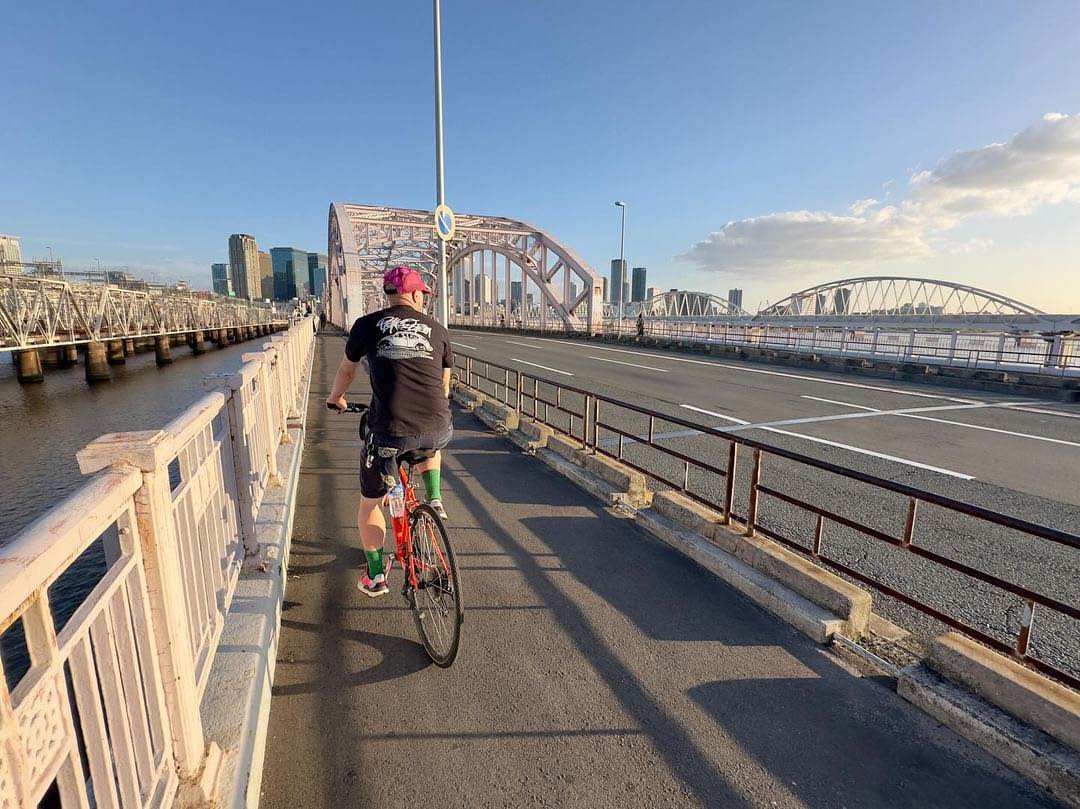
The Food/Bike tour is our best-known ride but not our only one. The Urban Street Art tour spends 4 to 5 hours in Tenma, Juso and Nakazaki-cho exploring at the city's growing mural scene, with coffee and pizza included, ¥13,500 per person. The Rivers & Hills of Minoh tour is the one for stronger riders: a private e-bike day covering roughly 55 km out of the city and up into the forested hills and waterfalls north of it, ¥75,000 per group, minimum height 160 cm. And our family tours are private, flexible, from 3 hours and 10 km, with kids' bikes and child seats, ¥60,000 per group.
If you're traveling on through Japan, our family companies run the same kind of rides elsewhere: Cycle Kyoto for temples and backstreets, Cycle Hiroshima for the city and Miyajima island, and Cycle Kasagi for tea fields and countryside an hour from Kyoto. Book tours in more than one city and there's 10% off with the code PACKAGE at checkout.
Ride with us
Cycle Osaka has been running small-group bike tours of this city since 2013 — the first of the four companies that became Cycle Japan. Local guides, small groups, good bikes, and a genuine fondness for a city that most itineraries treat as a day trip from Kyoto.